“one seed” search results (3000)

The growth cycle of coffee and picking coffee beans are the seeds of coffee trees.
Coffee beans are the seeds of coffee trees. After three or four years of growth, the coffee tree matures and begins to bear fruit, with one fruit arranged in clusters or clusters along the branches. The outside of the seed is a layer of peel, which can be picked as soon as it turns red. Under the red skin (exocarp) there is a layer of pulp (mesocarp), which is a small thin layer, and then a layer of material endocarp like parchment. In
2015-10-17 Coffee growth cycle picking coffee beans tree knots coffee over
Brief introduction of Chinese Coffee Yunnan small Coffee beans
Coffee cherries generally have two flat seeds inside. If there is one seed that does not grow properly, there is only one bean seed sprouting, and there is only a small round bean (deformed) in a small crack in the center, which is called pea-shaped coffee bean (peaberry). Round beans (Peaberry) and jade silk (perle), Paula (Perla), Karakor (caracol). Normal
2014-09-04 Coffee knowledge Chinese coffee Yunnan coffee small grain coffee coffee introduction
Coffee knowledge-about planting
The planting techniques of herbal coffee are as follows:
2014-05-23 Coffee knowledge coffee cultivation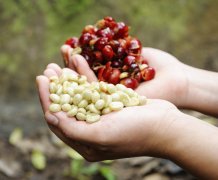
Anatomical structure of coffee beans the structure of coffee beans from the inside to the outside coffee fruit coffee pulp silver
Coffee is grown with seeds with endocarp, and the raw coffee beans we usually come into contact with have their endocarp removed, so they can't be planted. Endocarp (sheepskin or paper skin) refers to the tea-brown hard skin that surrounds coffee seeds, and coffee beans with that skin are called shelled beans (sheepskin paper beans). Usually there are two pairs of seeds in the fruit, but occasionally there is only one in the fruit.
2016-04-14 Coffee beans anatomy structure diagram from the inside structure coffee fruit pulp species
Basic information about coffee in the Encyclopedia of Fine Coffee
[scientific name] the small seed is Coffea arabicaL., the medium seed is Coffea canephora, the large seed is Coffea liberica, the small seed is also called Arabian, the middle seed is also called Gaffra, and the large seed is also called Liberian species, there are two common species: Arabica and Robusta. Rubiaceae (Rubiaceae), coffee genus (Coffea) [at home and abroad]
2015-01-07 Boutique coffee encyclopedia about basic information scientific name small grain Coffea
Common sense of Coffee in China characteristics of small seed Coffee in Yunnan
The small seed species is Coffea arabica L., the medium grain species is Coffea canephora, and the large grain species is Coffea liberica family: Rubiaceae Coffee is also called Arabian species, medium grain species is also called Gaffra species, and large grain species are also called Liberian species, there are two common species: Arabica and Robusta. Coffee is rich in protein, fat,
2014-11-21 Coffee knowledge coffee common sense Yunnan coffee small grain coffee
Talking about Coffee beans
1. Summary: coffee is a perennial evergreen shrub or small tree of Rubiaceae. It is native to tropical Africa and has been cultivated for more than 2000 years. The Arabs began to grow coffee in 525 BC, and it was popular for Arabs to stir-fry coffee beans. They began to grow coffee beans on a large scale after the 15th century, and were widely distributed in the tropics and subtropics of Europe, Asia, Africa and Latin America after the 18th century.
2014-07-02 Coffee beans coffee bean history coffee bean uses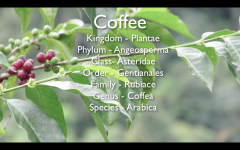
Coffee dictionary coffee beans Coffee Beans
What are coffee beans? What is Coffee Bean? Answer: coffee beans = coffee fruits or coffee raw beans or coffee cooked beans what people understand as coffee beans = coffee ripe beans but in fact, the concept of coffee beans is a mistake, there are no beans at all. # Baidu Encyclopedia entry: beans mainly refer to the seeds or pods of legumes. Leguminosae is a botanical definition.
2015-11-06 Coffee dictionary coffee beans Beans
Planting skills of herbaceous coffee trees
First, planting time: April 15-25 period. Second, planting location: plain, hillside, wasteland, front and back house, forest and fruit tree seedlings can be planted, but should not be planted in tall trees or other unventilated places. Third, herbal coffee does not like flood and fertilizer, conditional planting can use farm manure, during the growth period, it is best to irrigate 1-2 water during the growth period, absolutely do not allow the use of all kinds of chemical fertilizers and
2014-09-02 Coffee knowledge herbal coffee coffee tree planting coffee tree planting skills
Botanical characteristics of small seed Coffee
Coffee is a shallow root crop, and the plants propagated by seeds are conic roots. From the point of view of varieties, the roots of small and medium grain species are shallow, while those of large grain species are deeper. Yunnan small grain coffee is a 3-year-old 4-year-old fruit tree with a deep main root of about 70cm.
2014-06-17 Coffee knowledge small grains of coffee Yunnan coffee
An introduction to the basic concept of raw beans
Douxiao doesn't look good. Grading: the seeds are taken out and then screened and graded. Guatemala, Costa Rica and other countries are rated according to the planting height, more than 4500 feet above sea level is the highest "extremely hard bean" (SHB). Colombia, Kenya and New Guinea are graded by particle size, with larger and higher grades (with the exception of Kenyan beans). In addition, there are some producing countries in accordance with the defects.
2014-08-05 Coffee knowledge coffee raw bean knowledge
A brief talk on understanding coffee beans
1. Summary: coffee is a perennial evergreen shrub or small tree of Rubiaceae. It is native to tropical Africa and has been cultivated for more than 2000 years. The Arabs began to grow coffee in 525 BC, and it was popular for Arabs to stir-fry coffee beans. They began to grow coffee beans on a large scale after the 15th century, and were widely distributed in the tropics and subtropics of Europe, Asia, Africa and Latin America after the 18th century.
2014-09-25 Understand coffee beans and talk about coffee beans
Botanical characteristics of small seed Coffee
1. Root coffee is a shallow root crop, and the plant propagated with seeds is a cone root system. From the point of view of varieties, the roots of small and medium grain species are shallow, while those of large grain species are deeper. Yunnan small grain coffee is a 3-year-old 4-year-old fruit tree with a deep main root of about 70cm. The lateral root that grows horizontally from the main root is called the horizontal lateral root, the vertical lateral root grows downward, and the root extracted from the lateral root is called the secondary lateral root.
2016-06-05 Small grains coffee botany characteristics shallow roots crops seeds reproduction planting
Comprehensive data of Yunnan Coffee knowledge Yunnan Simao small seed Coffee
Coffee is an advantageous and characteristic industry in the hot area of our city, and it is also one of the main agricultural products that our city exports to earn foreign exchange. In order to standardize the production technology, product standards and marketing behavior of coffee industry in our city, and improve the standardization level of coffee industry, the comprehensive standard of Pu'er small seed coffee was compiled according to the requirements of GB/T1.1 and GB/T1.2. This section defines the terms and definitions in the initial processing of small seed coffee.
2014-11-19 Coffee knowledge Yunnan coffee coffee data Simao small seed coffee
Planting techniques of Coffee
First, planting time: April 15-25 period. Second, planting location: plain, hillside, wasteland, front and back house, forest and fruit tree seedlings can be planted, but should not be planted in tall trees or other unventilated places. Third, herbal coffee does not like flood and fertilizer, conditional planting can use farm manure, during the growth period, it is best to irrigate 1-2 water during the growth period, absolutely do not allow the use of all kinds of chemical fertilizers and
2014-07-08 Coffee knowledge coffee cultivation
The treatment of Coffee seed Manning Coffee in China Coffee Network Coffee production area Coffee
Sellers often mark Lintong Lindong and Mandheling Manning coffee as dry. In fact, the pulp and coffee seeds are often separated by a variety of mixing modes, and the more common is a backyard wet treatment. The smart farmer put the freshly picked coffee cherries into a simple peeling machine made of scrap metal, wood and bicycle parts. Then stick the peeled ones.
2016-04-15 China Coffee seed Mante treatment method producing area seller often Li
Introduction to the basic knowledge of raw beans in boutique coffee
Douxiao doesn't look good. Grading: the seeds are taken out and then screened and graded. Guatemala, Costa Rica and other countries are rated according to the planting height, more than 4500 feet above sea level is the highest "extremely hard bean" (SHB). Colombia, Kenya and New Guinea are graded by particle size, with larger and higher grades (with the exception of Kenyan beans). In addition, there are some producing countries in accordance with the defects.
2015-01-17 Boutique coffee raw beans basic knowledge introduction beans small not necessarily bad grading
A brief discussion on the knowledge of Coffee beans Encyclopedia
1. Summary: coffee is a perennial evergreen shrub or small tree of Rubiaceae. It is native to tropical Africa and has been cultivated for more than 2000 years. The Arabs began to grow coffee in 525 BC, and it was popular for Arabs to stir-fry coffee beans. They began to grow coffee beans on a large scale after the 15th century, and were widely distributed in the tropics and subtropics of Europe, Asia, Africa and Latin America after the 18th century.
2014-11-12 Coffee knowledge boutique coffee science coffee beans coffee encyclopedia
Coffee beans are important raw materials for making beverages
1. Summary: coffee is a perennial evergreen shrub or small tree of Rubiaceae. It is native to tropical Africa and has been cultivated for more than 2000 years. The Arabs began to grow coffee in 525 BC, and it was popular for Arabs to stir-fry coffee beans. They began to grow coffee beans on a large scale after the 15th century, and were widely distributed in the tropics and subtropics of Europe, Asia, Africa and Latin America after the 18th century.
2015-09-22 Talking about coffee beans production beverages important raw materials overview coffee grass for many years
Planting techniques of herbal coffee
First, planting time: April 15-25 period. Second, planting location: plain, hillside, wasteland, front and back house, forest and fruit tree seedlings can be planted, but should not be planted in tall trees or other unventilated places. Third, herbal coffee does not like flood and fertilizer, conditional planting can use farm manure, during the growth period, it is best to irrigate 1-2 water during the growth period, absolutely do not allow the use of all kinds of chemical fertilizers and
2014-06-17 Coffee knowledge herbal coffee planting techniques